Are You Building a Business That Makes Money—or One That's Worth Money?
Wednesday, November 11, 2026

MADabolic President Corbin Jennings shares how he grew from a first-time franchisee into a five-location operator—and why building a business someone else wants to buy requires a different mindset.
Wednesday, November 11, 2026
Jared Nassiff
Most people considering franchise ownership ask some version of the same questions: How much money can I make? How quickly can I replace my income? And how much freedom will this business give me?
Those are important questions. In fact, they're questions I spend considerable time helping prospective franchise owners work through. But I believe there's another question that deserves just as much attention, preferably before you ever invest in your first franchise:
Am I building a business that simply generates income, or am I building an asset that someone else will eventually want to buy?
The distinction is enormous. One approach focuses primarily on what the business can provide you today. The other considers what the business could become over the next five, ten, or fifteen years.
During a recent episode of Fran Opps Live, I sat down with Corbin Jennings, President of MADabolic, a strength-focused group fitness franchise. Corbin's journey is particularly interesting because he didn't enter franchising as a seasoned entrepreneur with an elaborate exit strategy. He started as someone looking for a different career.
Over the next decade, he went from opening one fitness studio to operating five locations across Washington, D.C., and Northern Virginia. He built a management structure that dramatically reduced his day-to-day involvement, began pursuing the sale of his business, and eventually accepted an opportunity to become president of the very franchise system he'd joined.
His story offers a valuable perspective on what separates owning a business from building something truly valuable.
The Exit Strategy Most First-Time Business Owners Never Consider
Corbin's introduction to MADabolic wasn't exactly conventional.
His wife had been attending the original location for years, but Corbin resisted joining her. He wasn't interested in traditional group fitness classes and preferred strength-focused training. Eventually, she convinced him to try a class, and he quickly became a believer in the programming.
Around the same time, he was becoming increasingly dissatisfied with his career. After experiencing the product firsthand and hearing about the performance of other locations, he began evaluating the business opportunity.
In 2016, he opened his first MADabolic franchise in Arlington, Virginia.
At the time, the franchise system was relatively small, and its infrastructure was far less developed than it is today. Corbin believed in the product and saw an opportunity to build something for himself, but he wasn't initially thinking about selling a multi-location business.
That perspective evolved as his first location succeeded and he began considering what the business could eventually become. Looking back, he recognized that many first-time franchise buyers enter ownership focused on escaping a career rather than developing a long-term exit strategy.
That's understandable, but it can also limit how someone approaches ownership.
If your only objective is to replace your paycheck, you may build a business that depends on you indefinitely. If your objective includes creating a transferable asset, you'll begin making different decisions about staffing, leadership, operations, and growth.
The difference isn't necessarily which franchise you buy. It's what you're intentionally building once you own it.
Growth Is Important, but Scalability Creates Value
Corbin's first MADabolic location performed well enough that he began looking for another opportunity. In 2019, he opened his second studio in Washington, D.C.
Then COVID arrived.
Despite the disruption, Corbin saw opportunities emerging as commercial rental rates declined and some competing fitness businesses closed. He continued expanding, opening two additional locations within 20 days of each other in late 2021, followed by a fifth in 2022.
But as his operation grew, something became clear: the management approach that worked at one location wasn't going to work across five.
Corbin described himself as someone who was always willing to jump in and do whatever needed to be done. If something went wrong, he would handle it. If an employee needed help, he would step in. If there was a gap in operations, he'd fill it himself.
That approach can be effective when you're running a single business, but it creates a serious limitation when you want to expand.
As Corbin explained:
"You can do that at location number one. At location number two, that starts to break, and location three, everything will fall apart."
His point wasn't that hard work stops mattering as a business grows. It's that the owner's personal effort cannot remain the primary operating system of a multi-location business.
Eventually, growth requires a different kind of leadership.
Corbin had to develop standard operating procedures, establish accountability, hire capable managers, and learn how to delegate responsibilities he had previously handled himself.
And he had to acknowledge something many entrepreneurs struggle to admit:
"I don't think I was a good manager when I came into MADabolic. I think I was a good leader."
Rather than attempting to become exceptional at everything, Corbin began building a team whose strengths complemented his own.
That's where his business started becoming more scalable.
The Most Valuable Business Is One That Doesn't Need You
By the time Corbin reached five locations, his organizational structure looked very different from the one he had when he started.
Each location had its own general manager. Above those managers, he promoted one of his best-performing employees into a regional director position, overseeing operations across all five studios.
This gave the organization another layer of accountability, leadership, and operational support. It also changed Corbin's role.
Instead of personally managing every location, he was managing the leaders responsible for those locations.
Eventually, he reached a point where he was spending approximately five to ten hours per week on the business, according to his account.
That wasn't how the business started, and it certainly wasn't automatic. It was the result of years spent developing people, establishing processes, and removing himself from daily operations.
But it also made the business more attractive to potential buyers.
Corbin explained:
"I think when you get really attractive to a large pool of buyers is when you're not important anymore."
That's a fascinating statement coming from someone who spent years building his own company.
Most entrepreneurs instinctively want to be indispensable. They take pride in being the person everyone calls when something goes wrong.
But when you're trying to sell a business, that indispensability can become a liability.
A buyer doesn't necessarily want to purchase a company that requires them to inherit your 80-hour workweek. They want to understand whether the business can continue operating effectively after ownership changes.
Two businesses could generate similar revenue and profits, yet have very different appeal to prospective buyers. One may depend entirely on its founder. The other may have established leadership, documented processes, and a team capable of maintaining operations without the owner constantly intervening.
The second business may appeal to a broader pool of buyers because its success is less dependent on one individual's knowledge, personality, and daily involvement.
The goal isn't to make yourself irrelevant to your business. It's to make your business capable of succeeding without your constant presence.
That's an entirely different definition of freedom.
Your Exit Strategy Should Influence Decisions You Make Today
Another interesting part of Corbin's story was how deliberately he began preparing his business for a future sale.
He didn't simply decide one day that he was ready to sell and immediately start looking for buyers. He spent time considering what those buyers would want.
For example, Corbin understood that the remaining terms on his commercial leases could influence the attractiveness of the business. He worked to position his locations with sufficient remaining lease terms and, where appropriate, negotiated extensions.
He also secured a larger territory that provided additional opportunities for expansion.
Why did that matter?
Because he wasn't merely selling the performance of five existing studios. He was considering how a prospective buyer might evaluate the opportunity to operate and potentially grow the business after acquiring it.
Of course, sale multiples depend on many factors, including profitability, market conditions, buyer demand, debt, and deal structure. Neither multiple locations nor favorable leases guarantee a premium valuation.
But Corbin's underlying lesson is important: the decisions you make while building your business can directly influence your options when you're ready to exit.
For prospective franchise owners, that means thinking beyond the initial franchise fee, buildout costs, and opening-day expenses.
What kind of territory are you securing? What flexibility exists in your lease? How will you develop management? What does your franchise agreement say about transferring ownership? How could your financing decisions affect future expansion?
These aren't questions reserved for entrepreneurs who are already preparing to sell.
They're questions worth considering before you buy.
Don't Confuse Owning Multiple Locations With Building Wealth
It's tempting to assume that the more franchise locations someone owns, the more successful they must be.
But Corbin's story reveals a more nuanced reality.
Multi-unit ownership requires a different skill set than operating a single location.
When I asked what he looks for in prospective franchisees, he made a distinction between owner-operators and people who intend to build larger organizations.
For someone planning to operate a single location, he emphasized grit, resilience, and a willingness to do the work.
But when someone wants to move immediately toward multi-unit ownership, Corbin looks for additional capabilities:
"I want to see that you are pretty disciplined as a business owner, understand some KPIs, and understand the business side of it a little bit more."
That's because multi-unit ownership isn't simply doing the same job in more locations.
It requires managing managers, understanding financial performance, developing accountability systems, and making decisions based on data rather than personal involvement in every operational detail.
In other words, successful expansion requires more than ambition. It requires discipline.
And this is where prospective franchise owners need to be especially thoughtful about their goals. Not everyone needs to become a multi-unit operator. A single-location business can be an excellent fit for someone whose primary objectives involve personal income, meaningful work, or a particular lifestyle.
But if your ambition is to build a larger, transferable asset, your ownership strategy needs to reflect that goal from the beginning.
Why Corbin Went From Franchisee to Brand President
Perhaps the most interesting part of Corbin's journey is what happened next.
After years of owning MADabolic locations, he had developed a deep understanding of the brand from the franchisee's perspective.
He knew what worked, and he also knew what could be improved.
Throughout his ownership experience, he and his wife had discussed opportunities to strengthen the franchise system—everything from technology and marketing to standardized operating procedures and better access to performance metrics.
When the opportunity arose to become MADabolic's president, Corbin saw a chance to help build the infrastructure he had once wished existed.
His goal was to provide franchisees with more comprehensive support, including continuing education, improved technology, clearer systems, and better access to the numbers that drive their businesses.
That's a valuable perspective because Corbin understands both sides of the franchise relationship.
He knows what it feels like to be a new franchisee trying to figure things out without fully developed systems. He also knows what it takes to grow beyond the first location and build a management team capable of operating independently.
Now, his objective is to help other MADabolic owners benefit from those experiences.
For someone evaluating franchise ownership, this raises an important consideration: what has the franchisor actually done to make ownership easier, more consistent, and more scalable for its franchisees?
A franchise brand shouldn't simply provide an initial training program and wish its owners well. It should be continuously improving the systems, tools, and support available to its franchisees.
Choose a Business You Believe Will Still Matter in 20 Years
Toward the end of our conversation, I asked Corbin what someone should look for in a franchise if their objective is long-term wealth creation rather than simply replacing a paycheck.
His answer included several important considerations.
First, evaluate the franchisor's systems. Are they truly developed, documented, and accessible?
Second, talk with existing franchisees. Don't simply accept the franchisor's presentation of the opportunity. Find out what ownership actually looks like for the people living it.
And third, believe in the product and its long-term relevance.
For Corbin, that was one of the reasons MADabolic appealed to him in the first place. He believed in its strength-focused programming and its potential to remain relevant beyond short-lived fitness trends.
"Something that has longevity to it. It's not just a trend."
That principle applies far beyond fitness.
Whether you're evaluating home services, senior care, education, food, fitness, or another industry, you should be asking whether the underlying consumer need is likely to remain meaningful over time.
No industry is immune to change, and even established categories can experience significant disruption. But evaluating long-term demand is a much better starting point than chasing whatever happens to be popular today.
After all, if you're building a business with the intention of selling it in ten years, the question isn't simply whether people want the product now.
It's whether there's a compelling reason to believe they'll still want it when you're ready to exit.
Final Thoughts: Build With the End in Mind
Corbin Jennings didn't enter franchising with a perfectly developed strategy for building and selling a multi-location business.
He started with a product he believed in, a desire to leave his career, and the willingness to take a risk on himself.
Over time, his vision evolved.
He learned that hard work could make one location successful, but systems and leadership were necessary to scale. He discovered that developing managers wasn't simply about reducing his workload; it was about creating a business that could operate without him. And he began making decisions with a future buyer in mind rather than focusing exclusively on today's revenue.
At the time of our interview, Corbin was working toward closing the sale of his five-location operation while stepping into his new role as MADabolic's president. His experience illustrates how an entrepreneur can move from working inside a business to building an asset designed to outlast their personal involvement.
And that's the lesson I hope every aspiring franchise owner takes away.
Don't limit your vision of business ownership to replacing the paycheck you already have.
Think about what you're building, who will eventually lead it, whether it can function without you, and what someone else might find valuable enough to purchase someday.
Because there's a meaningful difference between building a business that pays you while you own it and building a business that has value beyond your ownership.
The best time to start thinking about that difference isn't when you're ready to retire or sell.
It's before you ever open your doors.
Ready to Build Something Worth Owning?
If you're considering franchise ownership, I'd encourage you to think beyond the immediate questions of income replacement and lifestyle flexibility.
What do you ultimately want this business to become? Are you looking to operate one location, build a multi-unit portfolio, or create an asset you could eventually sell?
At Fran Opps, I help aspiring entrepreneurs evaluate franchise opportunities through the lens of their personal goals, financial readiness, desired ownership role, and long-term vision.
Whether you're interested in MADabolic or exploring other franchise opportunities, the goal is to find a business that aligns with what you're trying to build—not simply something that looks exciting today.
Start a conversation about franchise ownership
Join our Franchise Opportunities Facebook community
Explore Fran Opps
About the Author
Jared Nassiff is the Founder of Fran Opps and a franchise consultant who helps aspiring entrepreneurs evaluate franchise ownership opportunities across hundreds of vetted franchise brands. Through education, coaching, and interviews with industry leaders, Jared helps individuals franchise their future with confidence and clarity.
Hi, I'm Jared.
Author of Franchise Your Future
I created Franchise Your Future to give you clear, honest insight into what it actually takes to succeed in business ownership. My goal is to help you think better, make smarter decisions, and ultimately step into the right opportunity with confidence and clarity.
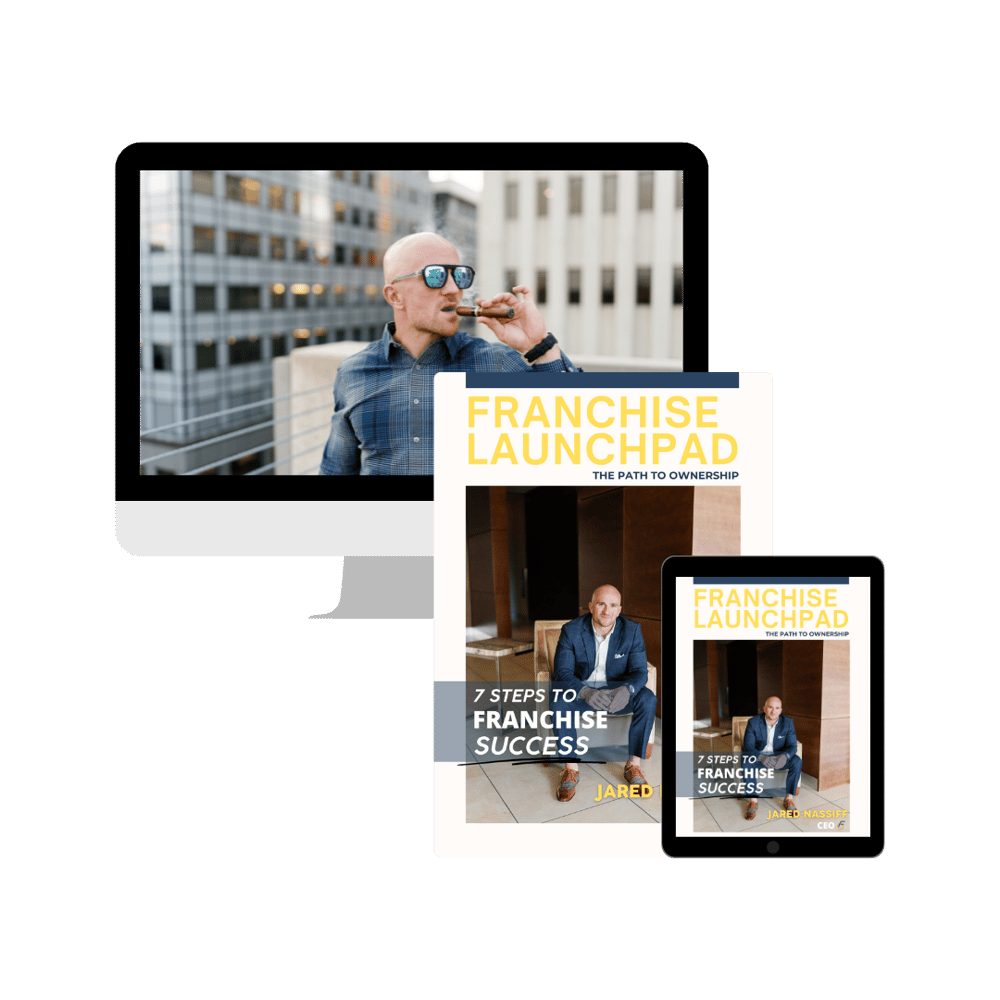
Get Our eBook:
Franchise Launchpad
This ebook is PACKED with valuable insight that will UNPACK the complex world of franchise ownership in 7 simple steps.
I'm only giving this away for FREE for a limited time, so grab your copy now and get on the path to franchise your future! Ownership, financial independence, and the lifestyle you desire isn't far away!